
24/7 Emergency Line Open
Claremont, CA · Garbage disposal service
Claremont Garbage Disposal Repair and Replacement for Jams, Leaks and Hums
A disposal that hums but does not spin, one that leaks into the cabinet or one that leaves the sink full of gray water is easy to ignore until it makes the kitchen unusable. The cause usually sits in a few places: the grinding chamber, the motor, the seals or the drain below it.
Before you reach for the sink, remember that a disposal is a motor and a blade assembly. Switch it off at the wall and never put a hand inside, even if the unit seems to be off.
- Licensed and insured plumbers
- Same-day service when available
- 24/7 emergency dispatch
Garbage disposal repair: jammed, humming or dead
A hum with no spin means the motor is working and the grinding plate is stuck. Food bones, fruit pits, a bottle cap or a fork that fell in can lock the plate. A unit that is completely silent has usually tripped its overload reset or lost power at the outlet or switch. A unit that runs but grinds poorly can have dull or worn parts, or a motor beginning to fail.
- Switch off the power and unplug the unit.
- Look into the chamber with a flashlight and remove any object you can see with tongs.
- Use a hex key in the socket under the unit to turn the plate back and forth and loosen the jam.
- Press the red reset button on the bottom of the unit.
- Restore power and run cold water as you test the disposal.
If the unit hums again, trips the reset a second time or smells hot, the motor or the bearings are failing, and the plumber will tell you whether a repair makes sense or whether a new unit costs less over time. Disposals are often not worth a major repair, and the plumber will say so plainly.
Leaks under the sink: where the water comes from
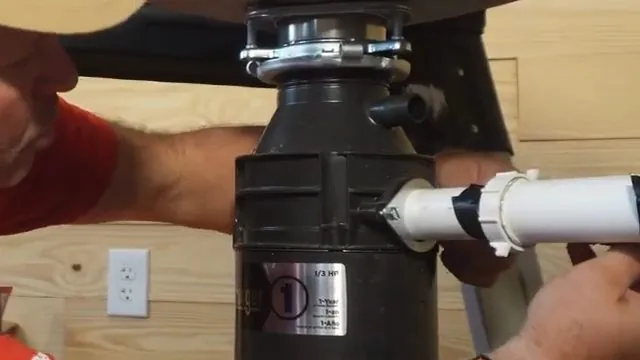
A disposal has several joints, and any of them can weep. Water from the top points to the sink flange or the mounting ring, where the seal has dried out or the sink was stressed. Water from the side points to the dishwasher inlet or the drain outlet. Water from the bottom or the seam of the unit means the housing has cracked or the internal seal has failed, and that is usually the end of the unit.
| Where the water appears | Likely cause | Usual remedy |
|---|---|---|
| Around the sink flange at the top | Dried plumber putty or a loose mounting ring | Reseat the flange and tighten the ring |
| At the dishwasher inlet | Loose hose clamp or a worn connection | Tighten or replace the hose and clamp |
| At the drain outlet | A worn gasket or a loose bolt | Replace the gasket and refit the pipe |
| From the housing or bottom seam | A failed internal seal or a cracked body | Replace the unit |
Water in the cabinet should be dried quickly, since particle board swells and grows mold when it stays wet. If the leak has soaked a wall or the floor, see water removal and drying. A fixture leak elsewhere at the sink, such as a faucet or supply line, is covered on the toilet repair page.
Disposal jammed or leaking?
Call dispatch and describe what the unit is doing and where the water shows. A plumber serving your area picks it up from there.
Clogged sink and a disposal that will not drain
A disposal that grinds but leaves the sink standing in water has a clog downstream. Greasy scraps cool in the trap and the drain, and fibrous food such as celery, corn husks or potato peels can mat in the line. The drain, the trap and the branch line are checked in order, starting with the nearest part.
- Run cold water while the disposal works, and for about 15 seconds after it stops.
- Keep grease out of the sink. Pour it into a can instead, since it hardens in the drain.
- Be careful with fibrous scraps such as celery strings, artichoke leaves and corn husks.
- Do not use chemical drain cleaners on a sink with a disposal. They can damage the parts and splash back.
If the plumber clears the trap and the line still backs up, the problem is farther down, and the clearing the drain page explains the next steps. A kitchen line that clogs again and again may need to be cleaned further down or camera inspected.
Garbage disposal installation and replacement
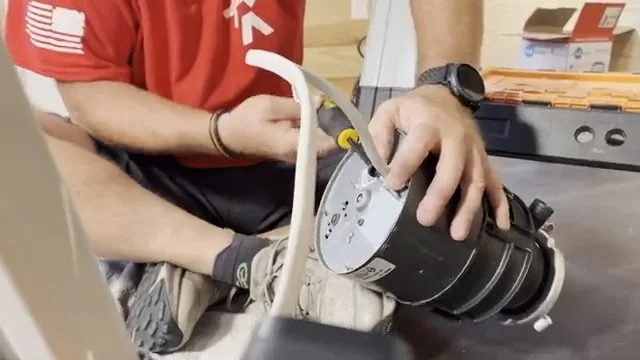
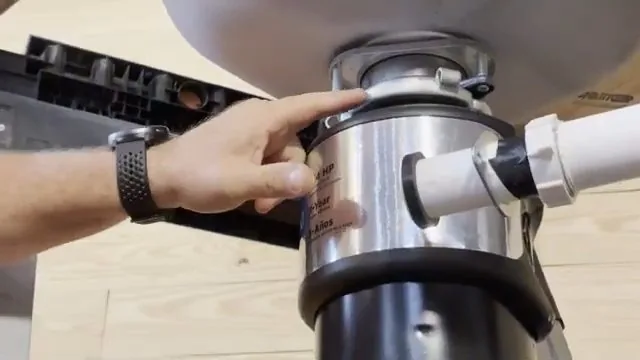
A new disposal is a straightforward job when the sink already has one. The old unit is disconnected from the mounting ring, the new one is locked on and the drain and dishwasher connections are rebuilt. Choose a size and horsepower to match how you cook. A larger motor handles more and jams less, and an undersized unit struggles in a busy kitchen.
A first-time installation is more involved. The sink needs the right opening, the electrical supply needs a switch or an outlet under the sink, and the drain has to be arranged so the disposal sits above the trap. Where there was no disposal, the plumber may need an electrician for the power, and says so up front.
The dishwasher connection
The dishwasher drains through the disposal or through an air gap. A knockout plug inside a new disposal has to be removed before the dishwasher hose is connected, and forgetting it is a classic reason a dishwasher will not drain after the install. The plumber checks that step and runs a dishwasher cycle to test the connection.
Replacing a garbage disposal?
Call now and reach dispatch for a plumber serving your area. Same-day service is offered when available.
Common questions about garbage disposals
Why does my disposal hum but not spin?
The motor has power and something is stopping the grinding plate. Switching off the power and turning the plate with a hex key often loosens it.
Is it safe to put my hand in the disposal?
No. Switch off and unplug the unit first, and use tongs or pliers. A unit that seems off can still start.
Can a disposal handle bones and peels?
Large bones, pits and fibrous peels cause jams. Small soft scraps are what the unit is built for.
Should I repair or replace an old disposal?
A jam or a loose connection is a quick repair. A cracked housing, a seam leak or a failing motor is usually a replacement.
Why does my dishwasher back up after a new disposal?
The dishwasher knockout plug may not have been removed from the new unit. The plumber checks and clears it.
Disposal trouble in Claremont?
Call now and reach dispatch for a licensed and insured plumber serving your area. Same-day service is offered when available.
- Licensed and insured plumbers
- Same-day service when available
- 24/7 emergency dispatch